Writing & Therapy
Both my writing and my clinical work are connected by the same question:
What helps people move — gently but meaningfully — toward a life that feels more coherent, more livable, and more their own?
Writing Across Contexts
Prior to becoming a therapist, my work focused on writing, dialogue, and learning. I’ve focused on how we engage across difference, how identity shifts over time, how language shapes what feels possible, and how creatively re-inventing practices for ourselves and with others can bring about more rich, resonant, and productive ways of being and of being together. Paying attention to not only what we are doing together but how we are being together can re-write institutions that we need to come through for us but are no longer working well for us and in some cases never were.
That work continues to inform how I think about therapy: as a space where new ways of understanding ourselves, experiencing ourselves, and being ourselves can emerge.
Alongside my academic work, I’m interested in more reflective grounded writing — essays that draw from therapy, literature, science, nature and everyday life to explore what it means to live and change, navigate systems, be in relationships, and make our way in complex times.
Featured Books
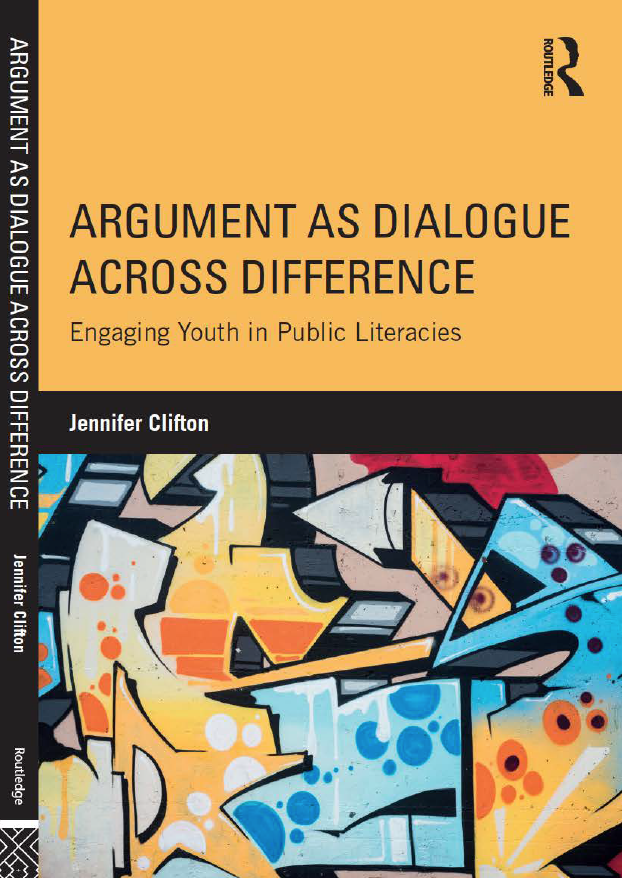
This book explores what becomes possible when we approach disagreement as an inquiry, and in that spirit, it starts with a question: What might it mean to teach argument in ways that open up spaces for change—changes of mind, changes of practice and policy, changes in ways of talking and relating?
Rather than framing argument as persuasion, it looks at dialogue as a practice — one that can open space for reflection, movement, invention, capable of producing new ways of being, doing, and becoming together.
"I can think of no more timely, moral, and smart approach to literacy in and out of school than Jennifer Clifton’s new book. Unless we humans learn to discuss critical issues with each other across differences in a joint journey, not to conversion, but to a better shared world, there may soon be no livable world left for us."
James Paul Gee, Mary Lou Fulton Presidential Professor of Literacy Studies and Regents’ Professor, Arizona State University, USA
"The ideas in this book completely transformed my perspective as an argument writing teacher. My students now view conflict as more than a two-sided philosophical battle of little interest or relevance. Rather than ‘solving’ hypothetical problems by choosing the 'right' stance, they engage with community stakeholders to enact real change. Their flexibility in critically weighing complex issues results in their being better equipped to grapple with the complexities of the adult world."
Julie Sheerman, Co-Director, Missouri Writing Project, Teacher Consultant, Marceline High School, Missouri, US
"Jennifer Clifton’s ideas should provoke teachers of argumentation—that is, all English, debate, and composition teachers—to rethink the nature of argument as well as their purposes and practices for teaching it. In thoughtful, but accessible prose that invites readers into dialogue, Clifton unpacks a theoretical and practice based stance that veers from the polarization so evident in contemporary society and instead offers innovative ways to engage wide-ranging perspectives within ever changing and diverse contexts."
Bob Fecho, Professor of English Education, Teachers College, Columbia University, USA
"Clifton offers a theoretically rich and beautifully felt account of why we must teach argument as a means of positive social change in secondary through university classrooms. As Clifton notes, the stakes could not be higher, from police brutality and wage disparities, to marriage rights and access to clean water; how youth learn to argue together is fundamentally about crafting more equitable futures. Necessary reading for all of us who teach and study literacies, composition, and justice."
Django Paris . Associate Professor, College of Education, Department of Teacher Education, Michigan State University, USA
Reviews
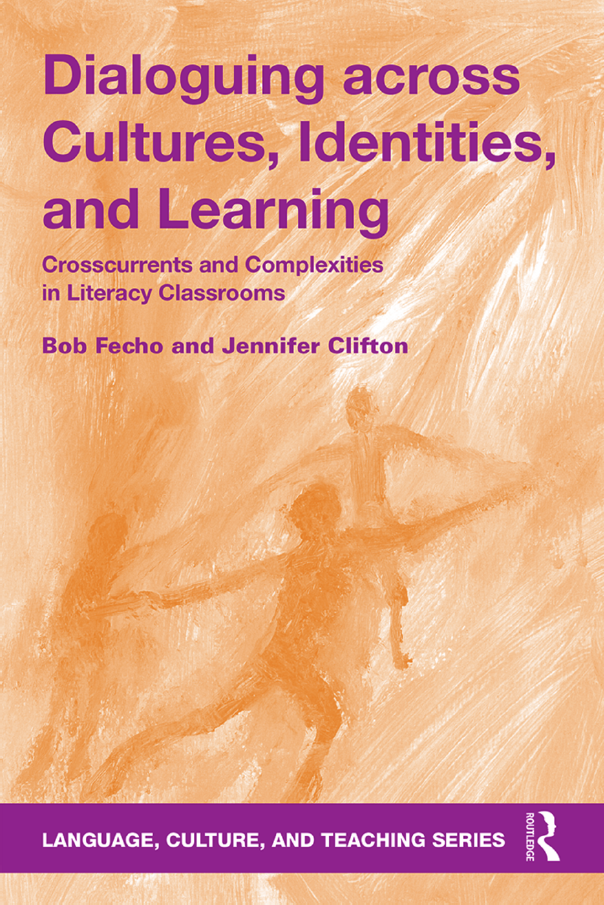
This book draws on dialogical perspectives of the self — how we are shaped through multiple, often competing voices, both internal and relational.
It explores how people come to understand themselves over time, and how change becomes possible not through force, but through new forms of dialogue with ourselves and others.
Featured Essays
I’m currently developing writing that explores:
depth therapy and psychoanalytic psychotherapy
the making of a therapeutic relationship
hope and dread in therapy and in life
the interesting and important work of uncertainty and not knowing
unpacking notions of “change” and “cure” in psychotherapy
living on the “wrong side” of a “right life”
on the double-edgedness of choice
connection, avoidance and dialogical selves
institutional harm and the making and unmaking of a self
homo sacre and the simultaneous force of attraction and repulsion
symptoms as creative, brilliant, makeshift protections and ways of knowing yourself
on not being able to think beyond what terrifies us
literature and the natural world as entry points for exploring the unconscious